Case Study · Pet · Supplements · 8-Figure
NaturVet

Scaling an 8-figure pet brand from $40M to $46M — through structure, not more spend.

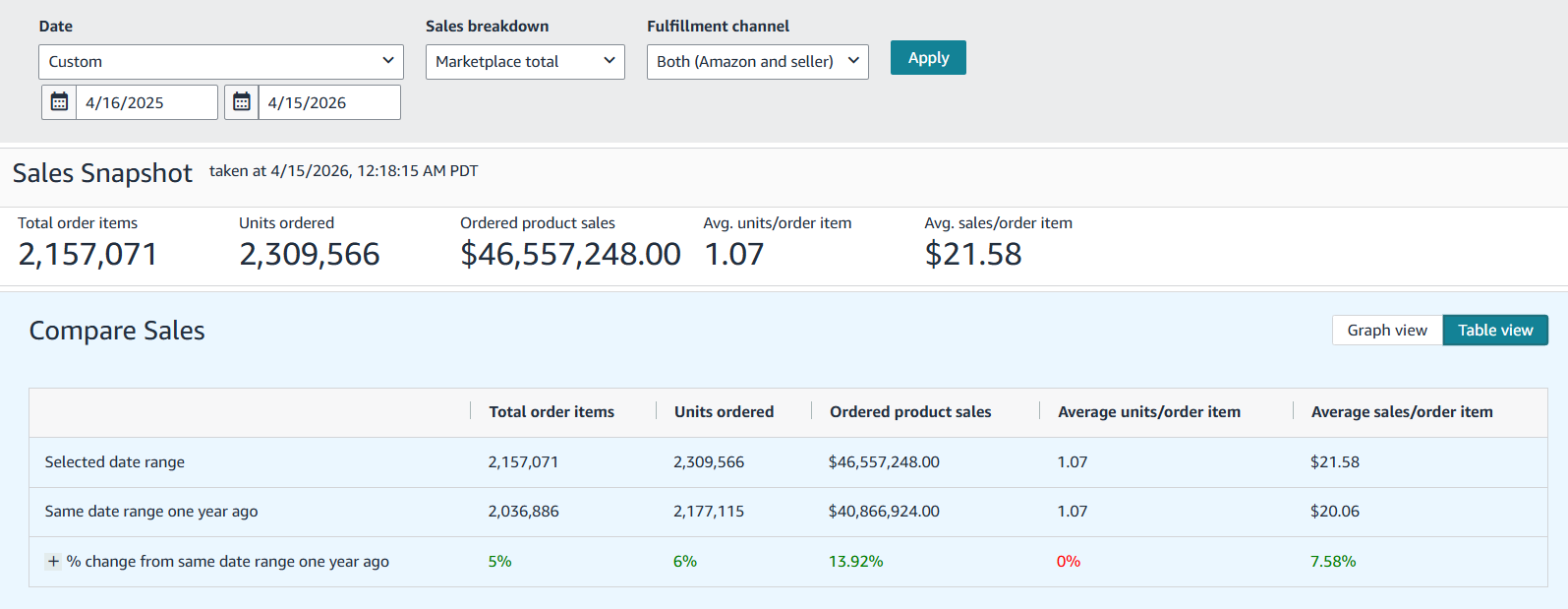
A US-based pet supplement brand already doing $40M annually when we took over. Growth had stalled from rising CPCs, hidden inefficiency across hundreds of ASINs, and budget bleeding into low-margin SKUs. This wasn't a turnaround — it was a strategic scale and optimization challenge at volume.

+14%
Revenue YoY
$46M
Annual Revenue
2.1M+
Units Ordered
12 mo
Engagement Window

The brand

NaturVet is a US-based pet supplement brand — vet-formulated supplements for dogs and cats covering everything from joint health and digestion to anxiety and immunity. By the time we took over PPC management, the brand was already a strong player in the category, generating $40M annually, with stable revenue and broad retail distribution.

Stable, however, wasn't the same as growing. The growth curve had started to flatten. Rising CPCs across the pet supplement category, increased competition from new entrants and big retailers, and inefficient budget allocation across an enormous SKU portfolio had quietly compressed the brand's growth ceiling.

The mandate was clear: scale the account intelligently — not by spending more, but by spending better.

The challenge

The complexity of the account itself was the main obstacle. With hundreds of parent ASINs, millions in annual ad spend, and seasonal demand patterns layered on top of a competitive category, inefficiencies were hidden inside scale. The numbers looked stable on the surface — and that was exactly the problem. At $40M, you don't grow by working harder. You grow by finding what's already broken and fixing it.

  • Budget spread too thin across low-impact SKUs that diluted overall account performance
  • Heavy spend on weaker-margin products that looked fine on revenue but dragged on profit
  • Internal campaign overlap and keyword cannibalization — the brand was bidding against itself
  • Rising CPCs across the pet category from increased competition and reduced targeting precision
  • Organic rank volatility on the keywords that actually drove revenue at scale

The goal wasn't to increase sales. It was to increase sales intelligently — protecting margin, defending market share, and building a structure that could compound.

Our approach

Four moves, in order. We didn't touch a single campaign until the portfolio analysis was done — because at this scale, the campaign structure follows the product strategy, not the other way around.

  1. Portfolio-Level Prioritization

    Instead of looking at campaigns first, we stepped back and analyzed revenue distribution across the entire catalog. We segmented every SKU using a BCG-style framework: Cash Cows (high revenue, stable margin), Stars (high growth potential), Question Marks (testing or scaling candidates), and Dogs (low margin or low velocity).

    Budget was reallocated toward Stars and Cash Cows. Spend on weaker SKUs was reduced or tightly controlled. This reallocation alone improved blended profitability before we touched a single campaign — because we stopped paying to advertise products that weren't worth advertising.

  2. PPC Restructuring at Scale

    Once product prioritization was clear, we restructured the campaign architecture to align with it. We consolidated overlapping campaigns, isolated high-intent keywords into dedicated scaling structures, reduced broad and low-converting spend, and optimized top-of-search multipliers based on actual conversion data.

    We expanded ASIN conquesting on competitor listings where we had product superiority, and applied dayparting based on observed conversion windows. Total spend didn't increase aggressively — it was redirected toward proven revenue drivers. Efficiency improved. The account kept growing.

  3. Organic Rank & Market Share Protection

    At $40M+ scale, protecting organic rank is just as important as gaining it. Losing page-one position on a hero keyword can cost six figures in a month. We monitored Search Query Performance weekly to track click share against purchase share and align them with our targeting.

    Sales velocity was intentionally concentrated on priority keywords to strengthen organic position and defend market share. The result: greater stability across top revenue-driving terms and improved share of voice in the most competitive placements in the category.

  4. Margin-Aware Scaling

    The biggest shift was introducing margin-based ACOS targeting at the SKU level. Higher-margin SKUs were allowed more aggressive scaling — we could afford a higher ACOS because the unit economics supported it. Lower-margin SKUs were optimized tightly for efficiency, not growth.

    This delivered three things at once: revenue growth without margin compression, healthy TACOS despite scaling spend, and predictable financial forecasting — which mattered as much as the topline number for a brand at this scale.

The Results

One year in: +$6M in revenue, healthier TACOS, stronger organic position, scalable structure.

From $40M to $46M annually — 14% YoY growth at 8-figure scale, with improved efficiency, not eroded margin. This was controlled, profitable growth driven by structure and prioritization, not reckless spending.

+14%
YoY Revenue Growth — $40M baseline scaled to $46M annual
2.3M
Units Ordered — across 2.16M order items, $21.58 AOV
$46M
Annual Revenue — protected margins, defended market share
Improved ad efficiency despite higher category competition and rising CPCs
Stronger organic position across core revenue-driving keywords
Better portfolio-level budget control and SKU-level discipline
Scalable campaign structure built for continued long-term growth
"

Scaling an 8-figure brand in a competitive category requires structure, prioritization, and disciplined decision-making. Growth at this level comes from intelligent budget allocation and margin awareness — not just more campaigns.

— The NaturVet Engagement

If you're an 8-figure brand stuck on a flat curve, we should talk.

Free 30-min strategy call. We'll pull up your account live and show you the three biggest levers we'd pull in the first 14 days. Whether we work together or not.

Book a Free Strategy Call

More case studies

Different stages of the curve. Same approach: structure, prioritization, senior attention.